RadarOpus UK
Blog
-
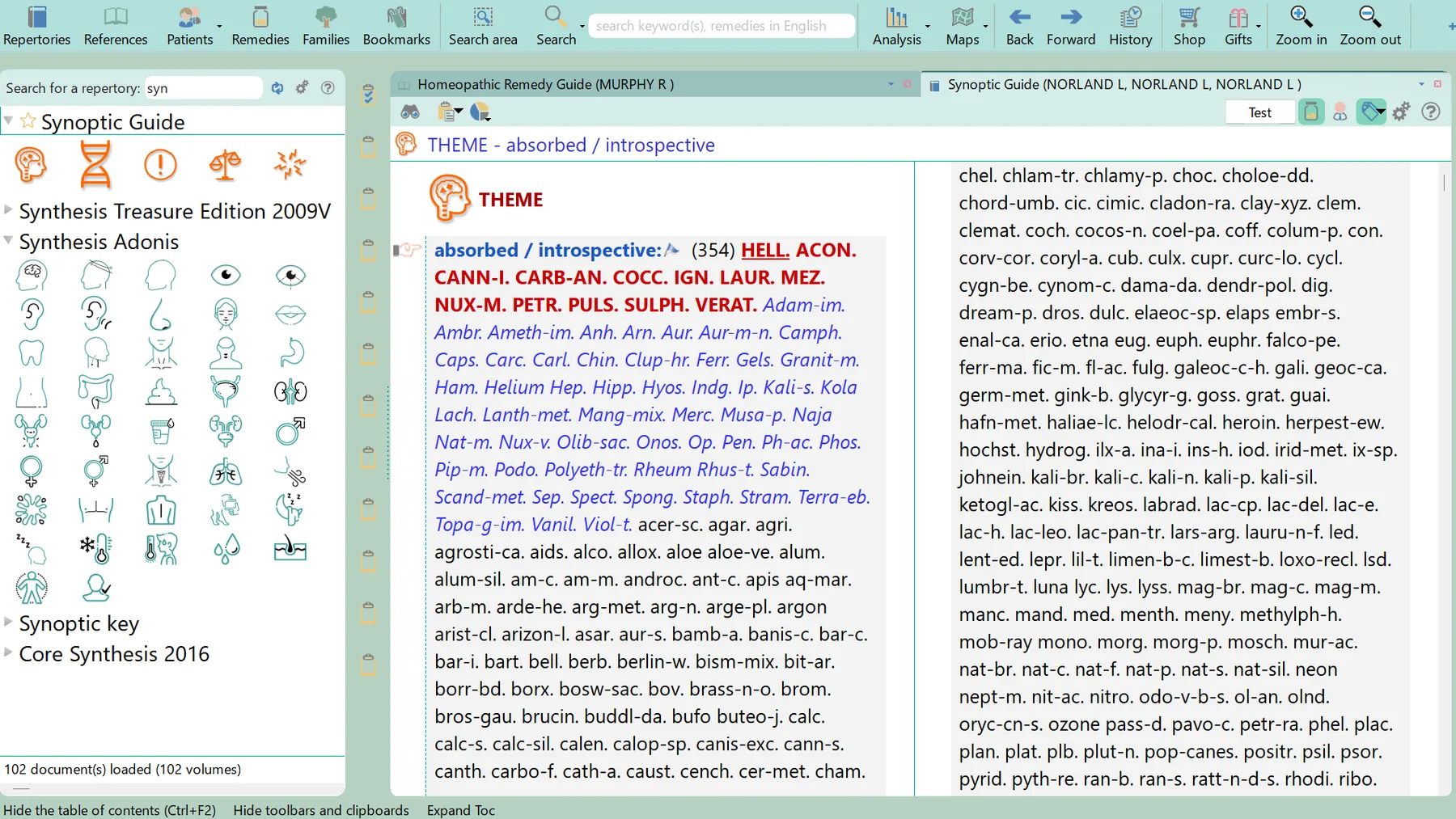
Make room to look again: filtering your Analysis
Hide selected remedies or explore one family in RadarOpus Analysis, with practical menu steps and links to the manual and Radar UK learning sessions.
Read more -
The Homeopathy Edit: a guide to working with provings
Read the 7 November Homeopathy Edit: a guide to studying proving sources and an EKAP GPS tutorial with Viktória Németh and Roberto Petrucci.
Read more -
RadarOpus 4.2.7: November software update notice
The 3 November 2026 RadarOpus 4.2.7 bulletin: back up patient data, check your version and system requirements, then install the correct update.
Read more -
Travel sickness: Cocculus, Tabacum or Petroleum?
Compare traditional travel sickness pictures of Cocculus, Tabacum and Petroleum, with keynote rubrics, food and air modalities, and source-reading guidance.
Read more -
Four new titles in RadarOpus, and meet Naqash
Meet Muhammad Naqash, your Radar UK contact, and explore four new repertory and Materia Medica titles announced in our October newsletter.
Read more -
The Homeopathy Edit: Beyond the Well-Indicated Remedy
Watch Gaurang Gaikwad and Luke Norland’s Beyond the Well-Indicated Remedy webinar and explore the Clinical Specific Repertory reading.
Read more -
Which is the best homeopathy software in 2026?
Compare nine homeopathy software options for 2026: repertories, libraries, costs, offline access, AI and privacy. A practical UK buyer’s guide.
Read more -
The Homeopathy Edit: studying the acids in homeopathy
Read the Zeus Soft exploration of acids in homeopathic literature and watch Matthew Zorn’s terminology tutorial in the 16 October Homeopathy Edit.
Read more -
The Homeopathy Edit: sarcodes and repertory views
Explore the three-part Zeus Soft reading on sarcodes, with a RadarOpus repertory-views tutorial from René Otter in the 9 October Homeopathy Edit.
Read more -
The Homeopathy Edit: insect remedies and advanced search
Read Naila Cheema’s exploration of insect remedies, then study a RadarOpus advanced-search tutorial in the 2 October Homeopathy Edit.
Read more -
The Homeopathy Edit: joint inflammation and repertorisation
Explore the first Homeopathy Edit: reading on joint inflammation and two RadarOpus tutorials on acute repertorisation with Marci Mearns.
Read more -
OpusGo: a mobile workflow for repertory study
Explore the OpusGo tutorial: search repertories, consult references, save analyses and learn how case export connects with RadarOpus.
Read more -
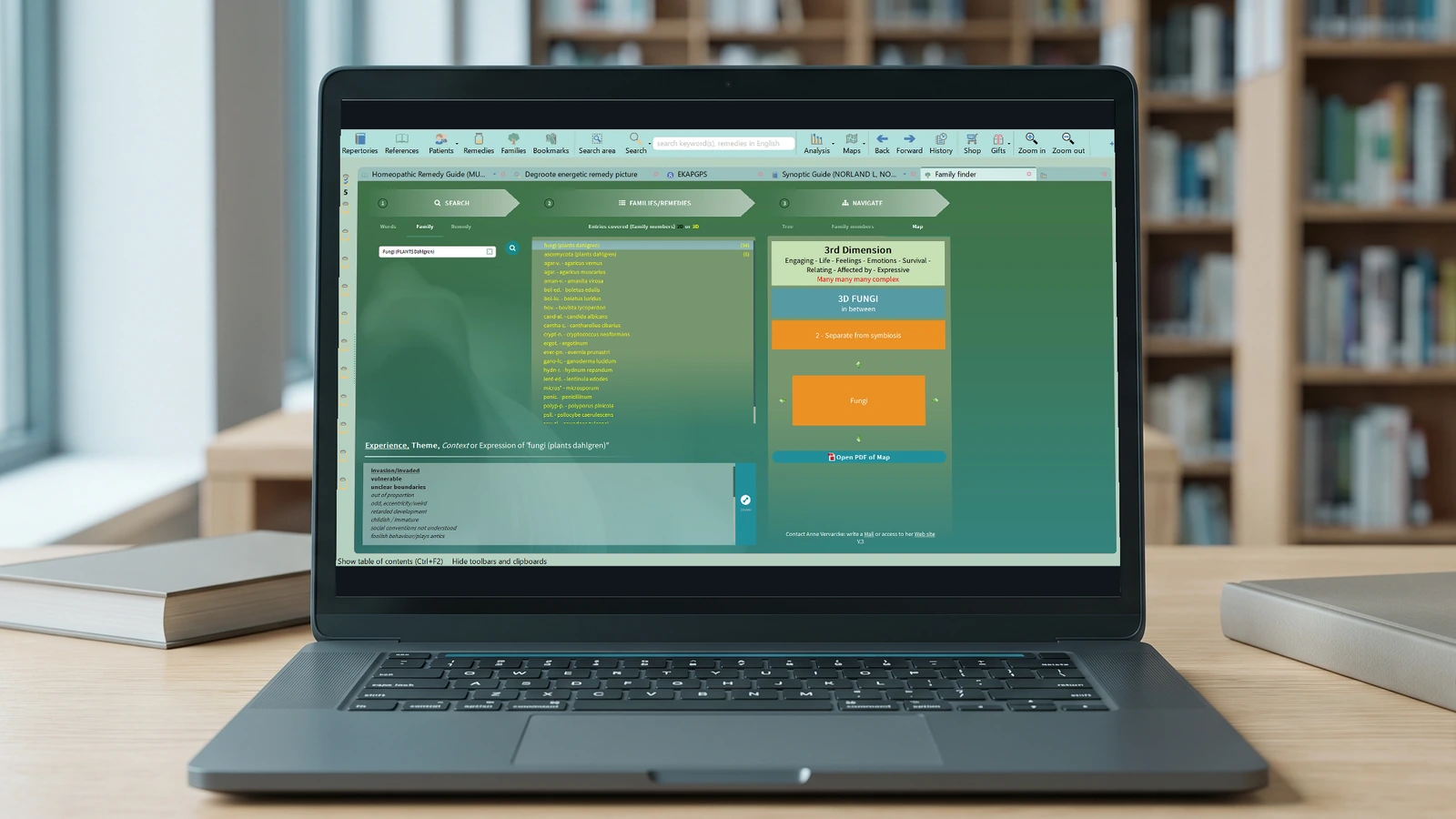
Family Finder: a few words and a wider picture
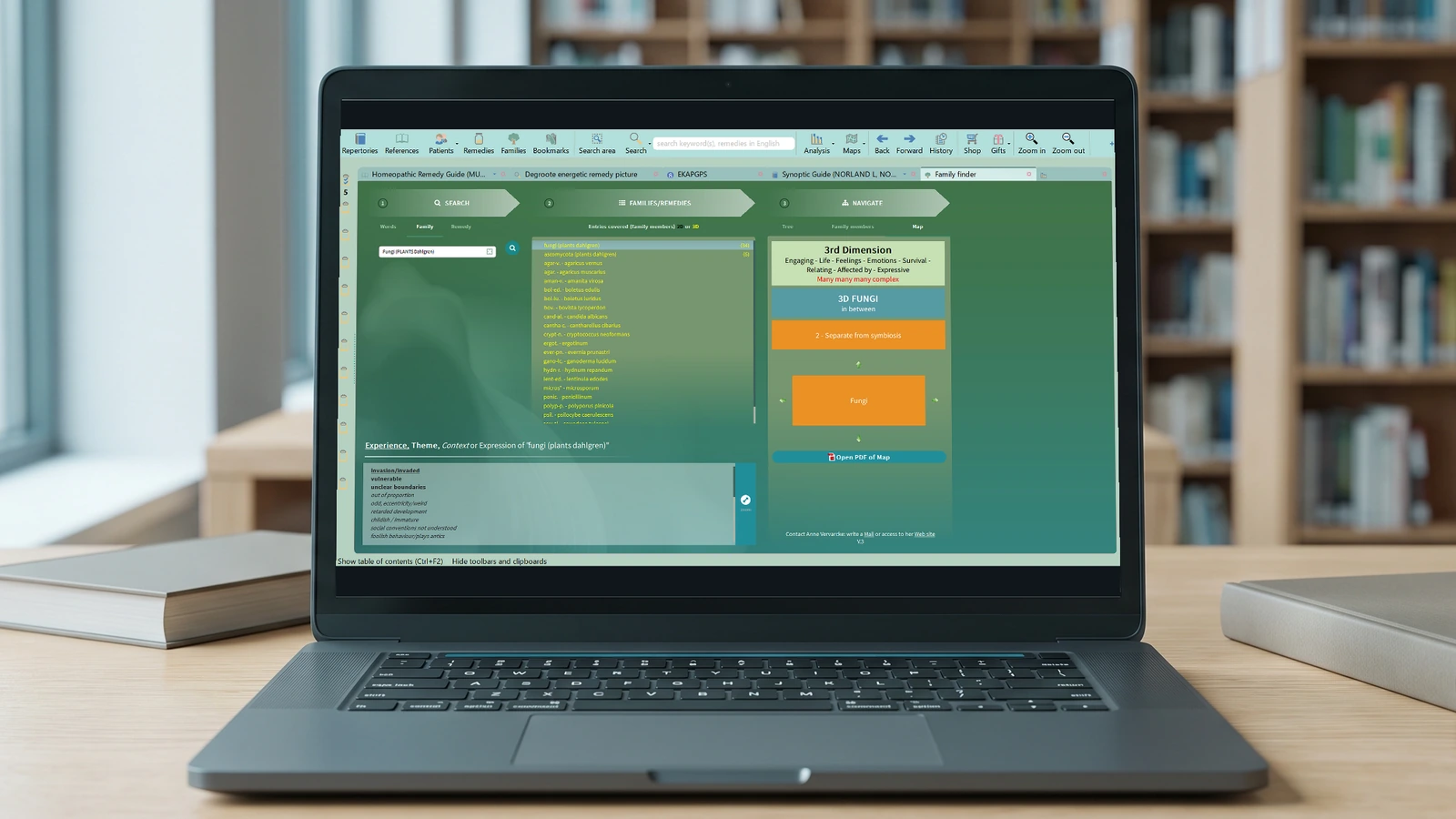
Explore Anne Vervarcke’s Family Finder teaching example: a few keywords, remedy families and a careful return to the descriptive text.
Read more -
Keep your repertory work: exporting personal additions
A practical guide from the newsletter archive to exporting RadarOpus additions as a logfile, selecting the material and keeping its origin clear.
Read more -
Yakir’s botanical tables: rows, columns and orders
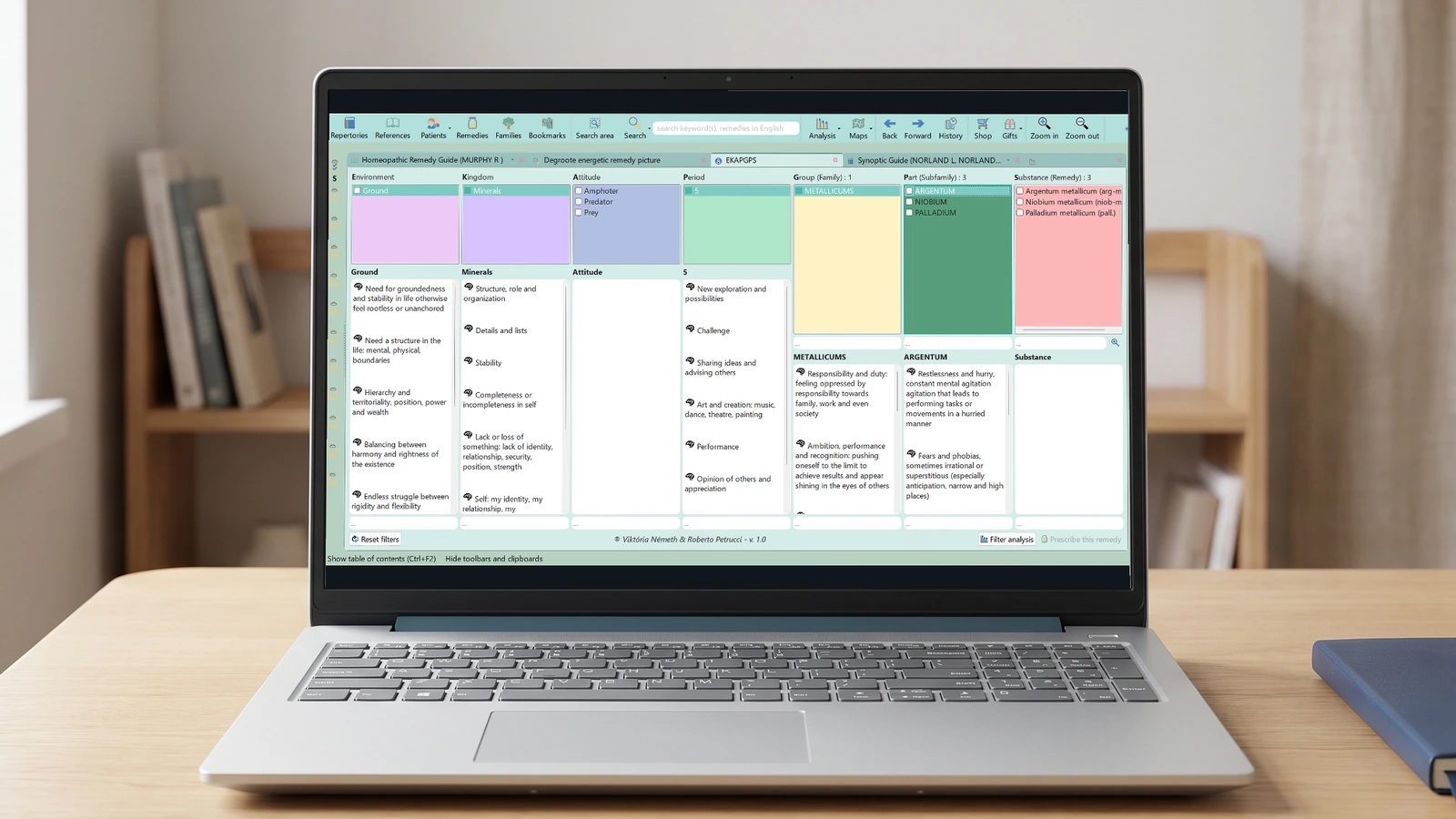
An introduction to Michal Yakir’s botanical tables, explaining columns, rows and plant orders before exploring the repertory.
Read more -
Reading posology across the Organon editions
An introduction to Per Neesgaard’s historical study of posology, comparing the questions raised across the fourth, fifth and sixth Organon editions.
Read more -
Q Rep: understanding Mental Qualities and grades
Explore Jeremy Sherr’s Mental Qualities, the thinking behind Q Rep and how its remedy grades help you read the repertory.
Read more -
Bönninghausen’s seven questions: describing the whole symptom
Explore Bönninghausen’s seven questions and CLAMS: a structured way to describe symptoms before looking for repertory entries.
Read more -
Suggesta: patient language and repertory structure
Explore the thinking behind Massimo Mangialavori’s Suggesta: patient language, recurring themes and the organisation of a repertory.
Read more -
Saine’s MMPP: reading the genius of a remedy
An introduction to André Saine’s Materia Medica Pura Project: remedy summaries, source material and searching for a coherent pattern.
Read more -
Roberts and Ward: following the language of sensation
Compare Roberts’ and Ward’s Sensations as if repertories: subjective descriptions, keyword study and reverse repertorisation.
Read more -
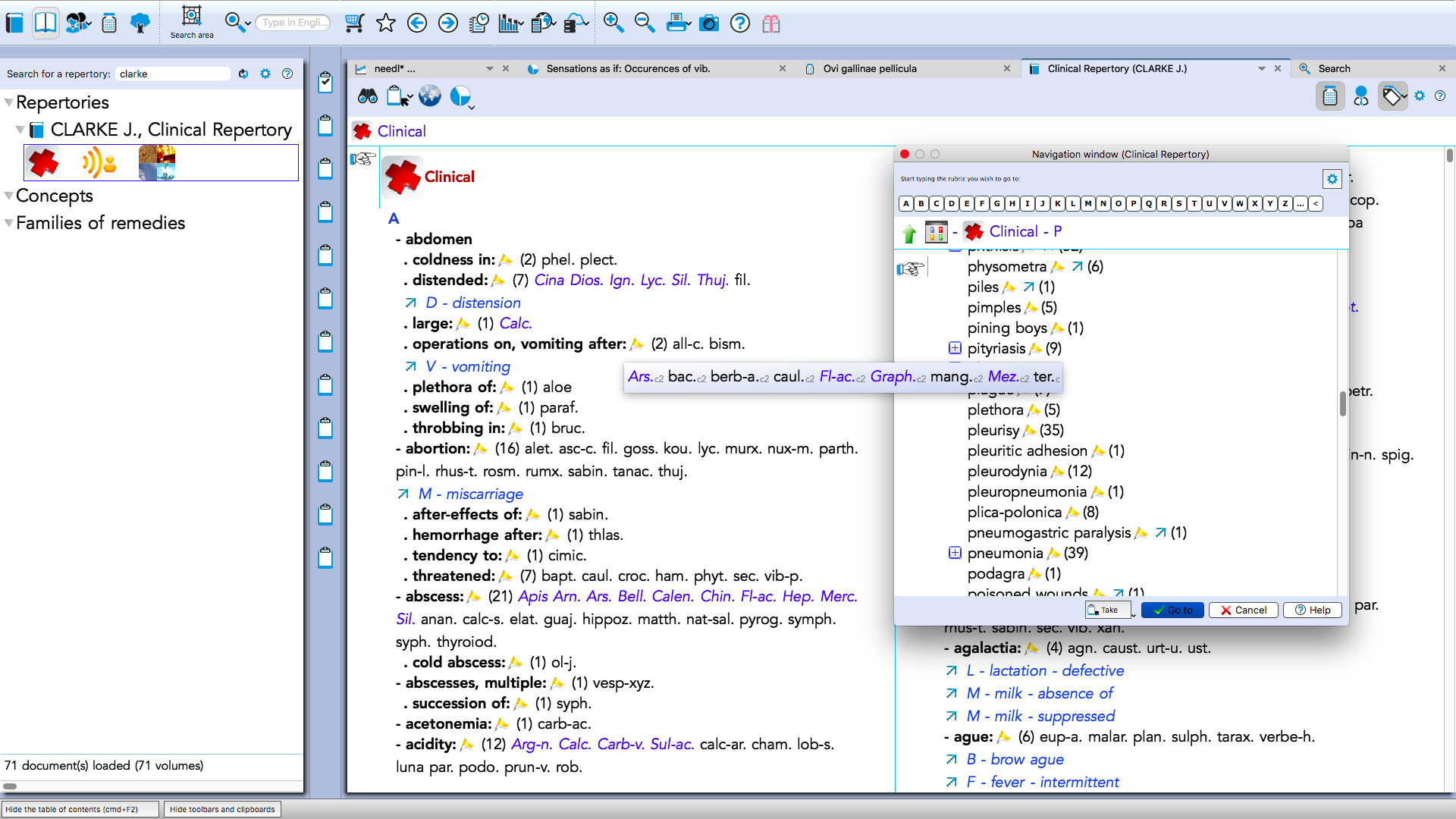
Clarke’s Clinical Repertory: another route into Materia Medica
Explore Clarke’s Clinical, Causation and Temperaments sections and how the repertory supports comparison with lesser-known remedies.
Read more -
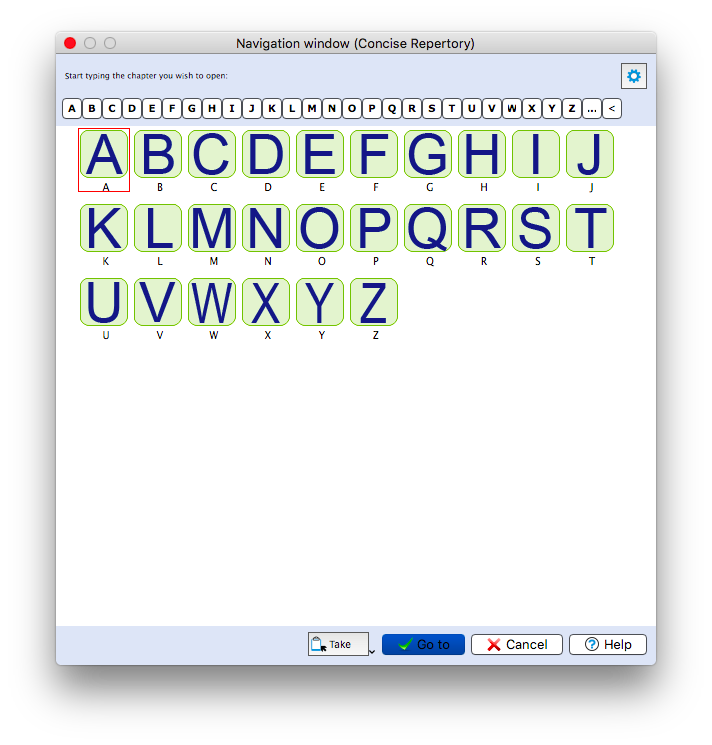
Phatak’s Concise Repertory: keeping the wider pattern in view
Study Phatak’s alphabetical repertory and its emphasis on affinities, causation, general sensations and modalities in a concise analysis.
Read more -
The Pocketbook, Dimitriadis and Polarity Analysis: three ways to study Bönninghausen
Distinguish the Therapeutic Pocketbook, Dimitriadis’ annotated repertory and Frei’s Polarity Analysis in this classical-repertory reading.
Read more -
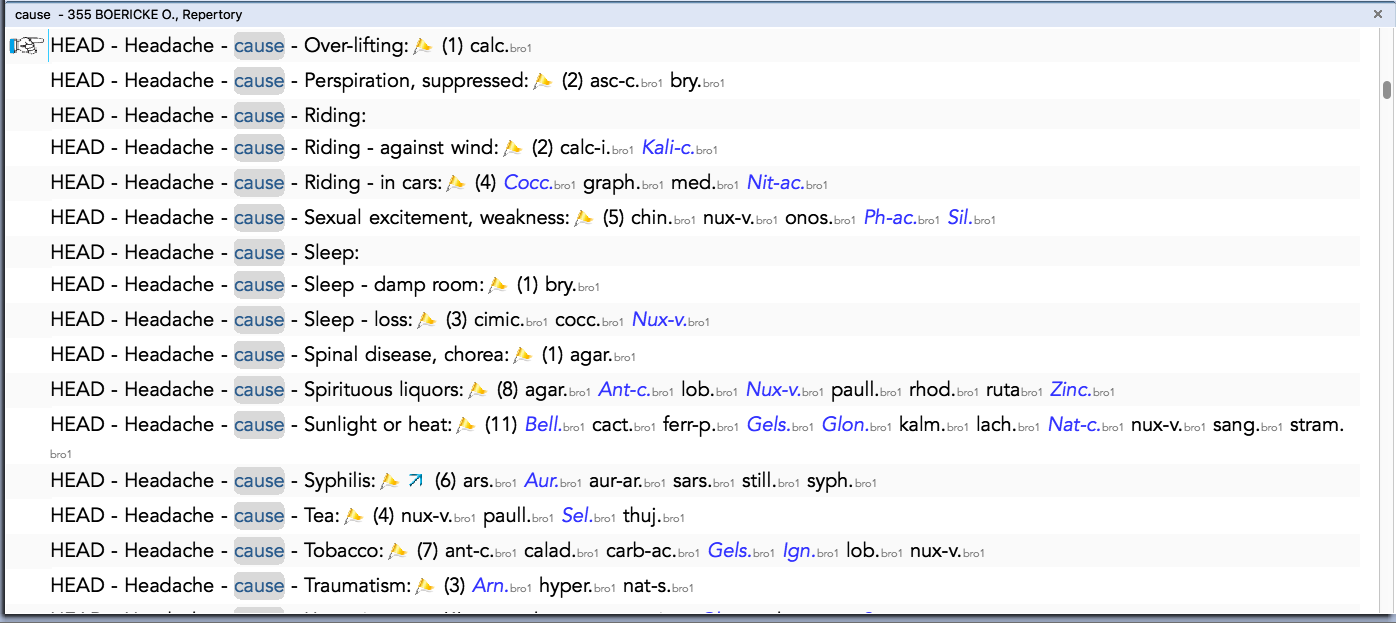
Boericke’s Repertory: following cause, character and context
Learn how Boericke’s clinical headings organise cause, location, sensations and modalities, with a sourced repertory-search example.
Read more -
Boger: concomitants and the wider pattern of a case
Compare the BBCR and Boger’s Synoptic Key: accompanying symptoms, modalities and the wider pattern behind a repertory analysis.
Read more -
Thematic Repertory: from themes to source rubrics
See how Luke Norland’s Thematic Repertory groups related Mind rubrics while keeping the constituent rubrics and family information available.
Read more -
Veterinary repertory: observation and language
Explore how the New World Veterinary Repertory adapts anatomical language and repertory structure for the study of animal cases.
Read more -
Reading the Lacs with Patricia Hatherly
Explore Patricia Hatherly’s Lacs Materia Medica and repertory, and see how provings, commentary and related reading fit together in RadarOpus.
Read more -
Two ways to read Vermeulen: the substance and the record
Compare two routes into Frans Vermeulen’s work: Source and Substance for the material itself, and Vista Vintage for original historical records.
Read more -
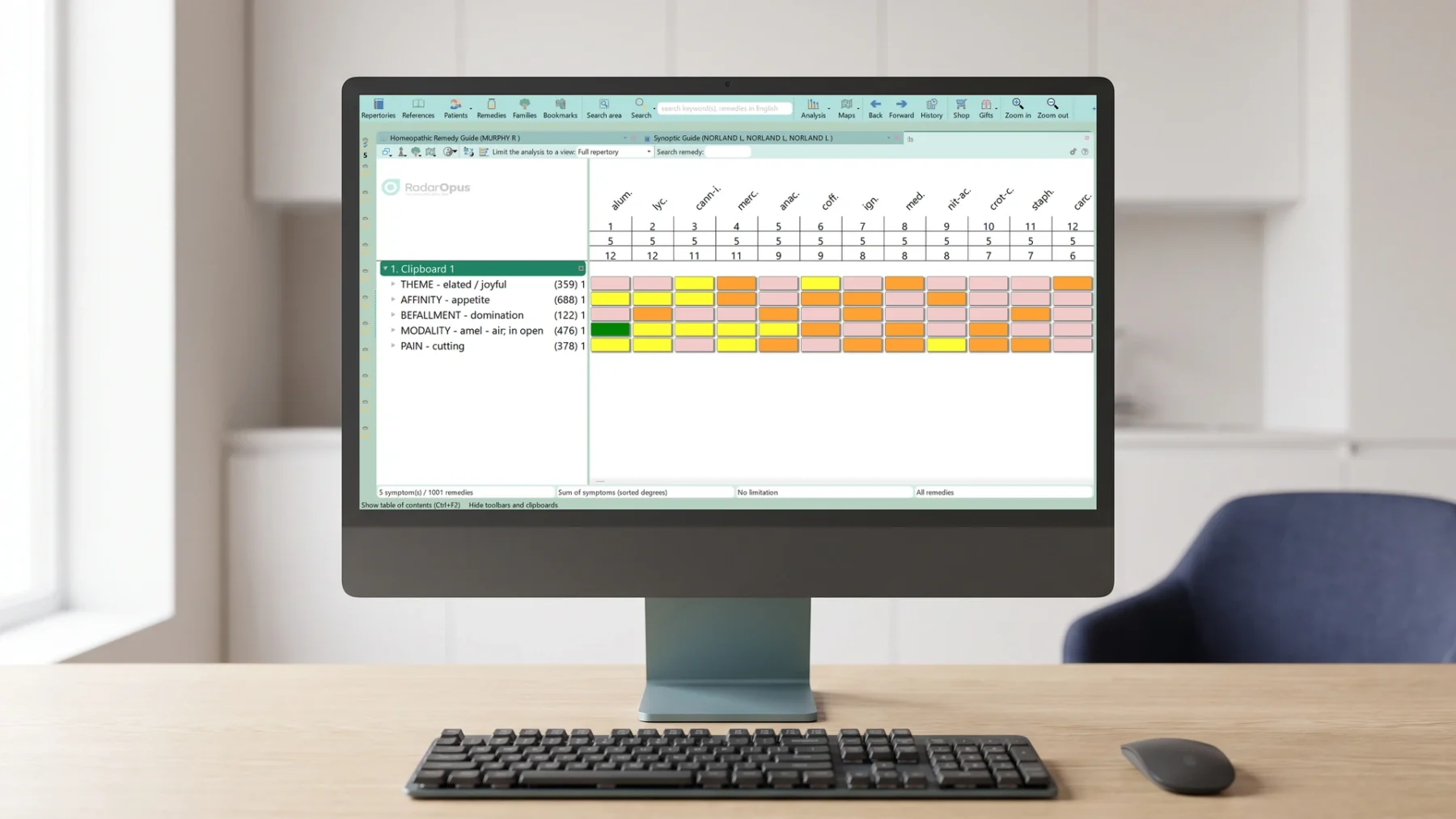
Combining rubrics: give one idea its proper weight
Understand the difference between grouping and combining rubrics, and how related repertory entries can be handled together in RadarOpus.
Read more -
New Books by the Joshis; read extracts & see screenshots!
Book Extracts:From “Homeopathy and Patterns in the Periodic Table”
Read more -
From a Materia Medica search to a custom rubric
Learn how a RadarOpus library search can become a custom rubric, while keeping the source passage and published repertory entry in view.
Read more